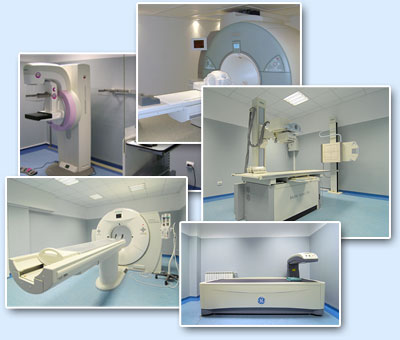
Medical Services - Medical Imaging (MRI, CT, Radiology, Mamography, Echography, Ultrasound)

Medical Imaging - Magnetic Resonance Imaging (MRI), Computed Tomography (CT), Radiology, Mamography, Echography, Ultrasound

Computed Tomography (CT)

A computed tomography (CT) scan uses X-rays to make detailed pictures of structures inside of the body.

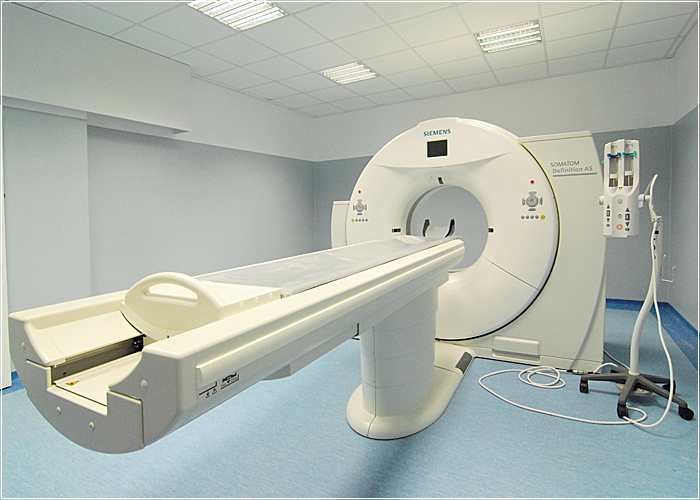
During a computed tomography (CT), you will lie on a table that is attached to the CT scanner, which is a large circular-shaped machine. The CT scanner sends X-rays through the body area being studied. Each rotation of the scanner takes less than a second and provides a picture of a thin slice of the organ or area. All of the pictures are saved as a group on a computer. They also can be printed.

An iodine dye (contrast material) is often used to make structures and organs easier to see on the CT pictures. The dye may be used to check blood flow, find tumors, and look for other problems. The dye can be used in different ways. It may be put in a vein (IV) in your arm, or it may be placed into other parts of your body (such as the rectum or a joint) to see those areas better. For some types of Computed Tomography scans you drink the dye. CT pictures may be taken before and after the dye is used.

Computed Tomography (CT) scan can be used to study all parts of your body, such as the chest, belly, pelvis, or an arm or leg. It can take pictures of body organs, such as the liver, pancreas, intestines, kidneys, bladder, adrenal glands, lungs, and heart. It also can study blood vessels, bones, and the spinal cord.

Computed tomography (CT) scans are used to study areas of the body and limbs.

  • Chest (thorax). A CT scan of the chest can look for problems with the lungs, heart, esophagus, the major blood vessel (aorta), or the tissues in the center of the chest
  • Abdomen. A CT scan of the abdomen can find cysts, abscesses, infection, tumors, an aneurysm, enlarged lymph nodes, foreign objects, bleeding in the belly, diverticulitis, inflammatory bowel disease, and appendicitis
  • Liver. A CT scan can find liver tumors, bleeding from the liver, and liver diseases. A CT scan of the liver can help determine the cause of jaundice
  • Pancreas. A CT scan can find a tumor in the pancreas or inflammation of the pancreas (pancreatitis)
  • Gallbladder and bile ducts. A CT scan can be used to check for blockage of the bile ducts. Gallstones occasionally show up on a CT scan
  • Adrenal glands. A CT scan can find tumors or enlarged adrenal glands
  • Spleen. A CT scan can be used to check for an injury to the spleen or the size of the spleen
  • Urinary tract. A CT scan of the kidneys, ureters, and bladder is called a CT KUB or CT urogram. This type of scan can find kidney stones, bladder stones, or blockage of the urinary tract
  • Pelvis. A CT scan can look for problems of organs in the pelvis. For a woman, these include the uterus, ovaries, and fallopian tubes. For a man, the pelvic organs include the prostate gland and the seminal vesicles
  • Arm or leg. A CT scan can look for problems of the arms or legs, including the shoulder, elbow, wrist, hand, hip, knee, ankle, or foot

An interview will take place as the patient is scheduled for such investigation. Some of the questions may be :

  • Are you or might be pregnant ?
  • Are you breast-feeding ? You will need to use formula for 1 to 2 days if you are given dye so that you do not pass the dye to your baby. You should throw out any breast milk you collect during this time
  • Are you allergic to any medicines, including iodine dyes ?
  • Have a heart condition, such as heart failure ?
  • Have diabetes or take metformin (Glucophage) for your diabetes ?
  • Have had kidney problems ?
  • Have asthma ?
  • Have had thyroid problems ?
  • Have had multiple myeloma ?
  • Have had an X-ray test using barium contrast material ?
  • Become very nervous in small spaces ?

Magnetic Resonance Imaging (MRI)

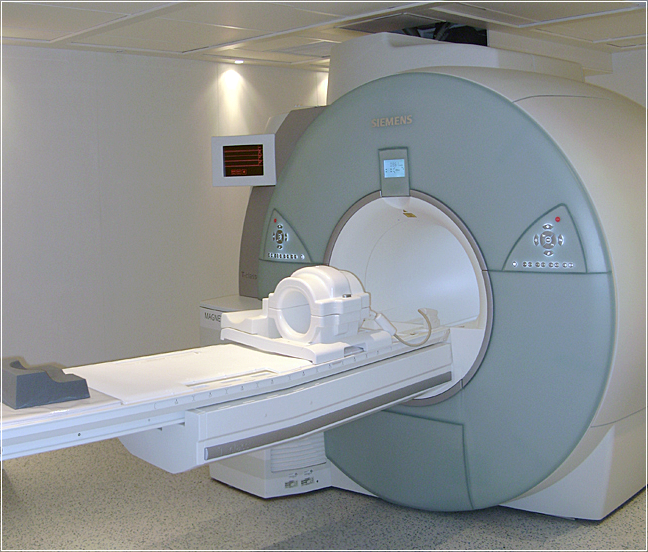
Magnetic Resonance Imaging (MRI) scan is a radiology technique that uses magnetism, radio waves, and a computer to produce images of body structures. The MRI scanner is a tube surrounded by a giant circular magnet. The patient is placed on a moveable bed that is inserted into the magnet. The magnet creates a strong magnetic field that aligns the protons of hydrogen atoms, which are then exposed to a beam of radio waves. This spins the various protons of the body, and they produce a faint signal that is detected by the receiver portion of the MRI scanner. The receiver information is processed by a computer, and an image is produced.

The image and resolution produced by Magnetic Resonance Imaging (MRI) is quite detailed and can detect tiny changes of structures within the body. For some procedures, contrast agents, such as gadolinium, are used to increase the accuracy of the images.

Magnetic Resonance Imaging (MRI) scan can be used as an extremely accurate method of disease detection throughout the body. In the head, trauma to the brain can be seen as bleeding or swelling. Other abnormalities often found include brain aneurysms, stroke, tumors of the brain, as well as tumors or inflammation of the spine.

Neurosurgeons use Magnetic Resonance Imaging (MRI) scan not only in defining brain anatomy but in evaluating the integrity of the spinal cord after trauma. It is also used when considering problems associated with the vertebrae or intervertebral discs of the spine. Magnetic Resonance Imaging (MRI) scan can evaluate the structure of the heart and aorta, where it can detect aneurysms or tears.

It provides valuable information on glands and organs within the abdomen, and accurate information about the structure of the joints, soft tissues, and bones of the body. Often, surgery can be deferred or more accurately directed after knowing the results of Magnetic Resonance Imaging (MRI) scan.

Magnetic Resonance Imaging (MRI) scan is a painless radiology technique that has the advantage of avoiding X-ray radiation exposure. There are no known side effects of MRI scan. The benefits of MRI scan relate to its precise accuracy in detecting structural abnormalities of the body.

Patients who have any metallic materials within the body must notify their physician prior to the examination or inform the MRI staff. Metallic chips, materials, surgical clips, or foreign material (artificial joints, metallic bone plates, or prosthetic devices, etc.) can significantly distort the images obtained by the MRI scanner. Patients who have heart pacemakers, metal implants, or metal chips or clips cannot be scanned with MRI because of the risk that the magnet may move the metal in these areas. Similarly, patients with artificial heart valves, metallic ear implants, bullet fragments, and chemotherapy or insulin pumps should not have MRI scanning.
All metallic objects on the body are removed prior to obtaining an MRI scan.

During the MRI scan, patient lies inside magnetic tube. Some patients can experience a claustrophobic sensation during the procedure. Therefore, patients with any history of claustrophobia should relate this to the practitioner who is requesting the test, as well as the radiology staff. A mild sedative can be given prior to the MRI scan to help alleviate this feeling. It is customary that the MRI staff will be nearby during MRI scan. Furthermore, there is usually a means of communication with the staff (such as a buzzer held by the patient) which can be used for contact if the patient cannot tolerate the scan.

Occasionally, patients will be given a sedative medication to decrease anxiety and relax the patient during the MRI scan. MRI scanning requires that the patient lie still for best accuracy. Patients lie within a closed environment inside the magnetic machine. Relaxation is important during the procedure and patients are asked to breathe normally. Interaction with the MRI technologist is maintained throughout the test. There are loud, repetitive clicking noises which occur during the test as the scanning proceeds. Occasionally, patients require injections of liquid intravenously to enhance the images which are obtained. The MRI scanning time depends on the exact area of the body studied, but ranges from half an hour.

After the Magnetic Resonance Imaging (MRI) scanning is completed, the computer generates visual images of the area of the body that was scanned. These images can be transferred to film (hard copy). A radiologist is a physician who is specially trained to interpret images of the body. The interpretation is transmitted in the form of a report to the practitioner who requested the MRI scan. The practitioner may then discuss the results with the patient and/or family.

Conclusions

  • MRI scanning uses magnetism, radio waves, and a computer to produce images of body structures
  • MRI scanning is painless and does not involve x-ray radiation
  • Patients with heart pacemakers, metal implants, or metal chips or clips cannot be scanned with MRI because of the effect of the magnet
  • Claustrophobic sensation can occur with MRI scanning
sus
Magnetic Resonance Imaging & Computed Tomography
Dr. Eugen Tarta Arsene - Radiology Medical Imaging Specialist
Dr. Lupescu Ioana - Radiology Medical Imaging Senior Specialist

Dr. Mihai Lesaru - Radiology Medical Imaging< Senior Specialist/td>
Dr. Smarandita Lacau - Radiology Medical Imaging Senior Specialist
Dr. Emilia Diaconu - Radiology Medical Imaging Senior Specialist
Dr. Elena Constantinescu - Radiology Medical Imaging Senior Specialist
Dr. Mihaly Enyedi - Radiology Medical Imaging Specialist
Florentin Daniel Preoteasa - Physicist
Radiology
Dr. Paraschiv Ionescu - Radiology Medical Imaging Senior Specialist; Competence in Ultrasound
Dr. Anca-Dorina Flintoaca-Filip - Radiology Medical Imaging Specialist
Assist. Silvia Toader
Assist. Gabriel Voicila
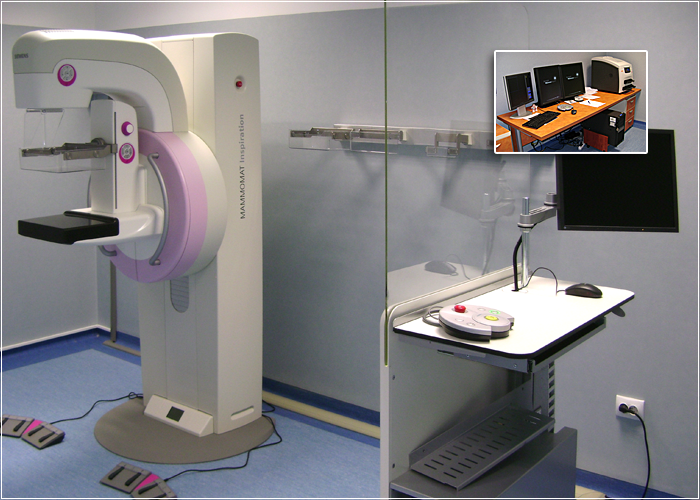
Mamography
Dr. Daniela Baditescu - Radiology Medical Imaging Senior Specialist
Dr. Aida Mihailovici - Radiology Medical Imaging Specialist
Ecography
Heart Ultrasound - Dr. Liliana Stefan - Cardiology Specialist
Heart Ultrasound - Dr. Eliza Acatrinei - Internal Medicine Specialiste
Heart Ultrasound - Dr. Oana Raluca Birzu - Cardiology Specialist
Mammary Ultrasound - Dr. Cornelia Nitipir - Clinical Oncology Senior Specialist
Mammary Ultrasound - Dr. Aida Mihailovici - Radiology Medical Imaging Specialist
Abdominal Ultrasound, Doppler - Dr. Gabriela Scurtu - Pediatrics Senior Specialist
Abdominal Ultrasound - Dr. Geta Cozma - Infectious Diseases Senior Specialist
Abdominal Ultrasound - Dr. Magdalena Zidu - Internal Medicine Specialist
Abdominal Ultrasound - Dr. Adrian Popescu - General Practitioner
Abdominal Ultrasound - Dr. Mihai Mavru - Senior Surgeon
Abdominal Ultrasound & Doppler - Conf. Dr. Cristina Mihaela Tanaseanu - Internal Medicine Senior Specialist
Gynaecological & Obstetric Ultrasound - Dr. Claudia Stefanescu - Ginecology & Obstetrics Senior Specialist
Thyroid Ultrasound, Testicular ultrasound - Dr. Bogdan Slabescu - Endocrinology Specialist
Vascular Ultrasound (2D, Dopppler, Triplex) - Dr. Florin Comsa -t Phlebolog Specialisy
up
  RON
Hepatic Elastography - The safe alternative to Liver Biopsy  
FibroScan Test (about FibroScan) 500
FibroTest - ActiTest (about FibroTest) 400
FibroMax (about FibroMax) 600
Magnetic Resonance Imaging (MRI) *  
Abdominal MRI with and without contrast 850
Abdominal MRI without contrast 600
Artro MRI 1000
Breast MRI with and without contrast 900
Breast MRI without contrast 520
Consultation (second opinion) 100
Cranio-cerebral MRI + orbits with contrast 900
Cranio-cerebral MRI + orbits without contrast 750
Cranio-cerebral MRI + pituitary with contrast 900
Cranio-cerebral MRI + pituitary without contrast 750
Cranio-cerebral MRI with contrast 730
Cranio-cerebral MRI without contrast 520
Filling-in MRI investigation 250
Functional MRI 1 000
Heart MRI 1 200
Limbs MRI / segment (knee, elbow, ankle, etc.) with contrast 760
Limbs MRI / segment (knee, elbow, ankle, etc.) without contrast 600
MR angiography supraaortic vessels 800
MR angiography aorta or renal arteries 800
MR Angography /segment 900
MRI Spectroscopy with and without contrast 850
MRI Spectroscopy without contrast 700
Pelvic MRI with and without contrast 850
Pelvic MRI without contrast 600
Sedation 120
Shoulder MRI with and wothout contrast 760
Shoulder MRI without contrast 600
Spine MRI / segment (cervical, thoracic, etc.) with contrast 730
Spine MRI / segment (cervical, thoracic, etc.) without contrast 520
Uro MRI 900
Computed Tomography  
Angio CT 600
Angio CT aorto-ilio-femoral axes 1 000
Angio CT evaluation of the abdominal circulation 550
Angio CT evaluation of the pulmonary circulation 700
Angio CT polygon of Willis 600
Angio CT supraaortic vessels 600
Angio CT thoracic/abdominal aorta 600
CD copy 15
Cerebral CT venography 600
Copy of existing hard copy 30
Cranial CT with nonionic contrast 330
Cranial CT without nonionic contrast 230
CT abdomen with nonionic contrast 450
CT abdomen without nonionic contrast 250
CT Bronchoscopy 650
CT Colonoscopy 650
CT inner year without contrast 500
CT inner year with contrast 650
CT limbs with nonionic contrast / segment 430
CT limbs without nonionic contrast / segment 230
CT neck with nonionic contrast 430
CT pelvis with nonionic contrast 450
CT pelvis without nonionic contrast 250
CT spine with nonionic contrast / segment 430
CT spine without nonionic contrast / segment 230
CT thorax with nonionic contrast 450
CT thorax without nonionic contrast 250
CT Urography 650
CT venography Inferior Vena Cava & ileo-femural vessels 1 000
CT venography superior/inferior Vena cava 600
CT neck without nonionic contrast 230
Dental CT 150
Hard copy 20
Scanography 100
Sedation 120
Radiology  
Abdominal x-ray without contrast 60
Ankle and foot x-ray - two views 100
Coxo-femoral x-ray front view 60
Coxo-femoral x-ray medio-lateral view 60
Hysterosalpingography 300
Intensive supervision urography 50
Limb segment X-ray (arm, forearm, thigh, calf) one view 50
Pelvic x-ray 60
Reno-vesical x-ray 60
Sacro-iliac joints x-ray - front view 40
Sacrum & coccys x-ray medio-lateral view 40
Skull x-ray one view 40
Skull x-ray special incidences (sella turcica, facial sinuses, nasal pyramid, mandible, mastoid, temporal mandibular joint) 50
Skull x-ray two views 90
Spine x-ray four views 150
Spine x-ray six views 210
Spine x-ray two views 80
Spine x-ray one view 40
Standard chest x-ray one view 40
Sternum x-ray one view 50
Thoracic x-ray one view 40
Urography - without contrast 250
Urography with cu Ultravist for weight < 50 kg 400
Urograpy with Ultravist for weight > 50 kg 500
X-ray Joints (elbow, fist, hand, knee, ankle, foot) one view 60
X-ray Small joints (finger, calcaneus, patella) 40
Mammography  
Bilateral mammography 150
Unilateral mamography 100
Ultrasound examination  
Hepatic ultrasound elastography (ARFI) 150
Abdominal ultrasound + hepatic ultrasound elastography (ARFI) 250
Fibroscan + hepatic ultrasound elastography (ARFI) 600
Breast ultrasound - Acuson S2000 (despre Acuson S2000) 150
Breast ultrasound 100
Carotid Doppler ultrasound 130
CD recording ultrasound examination (Pregnancy ultrasound only) 3
Cervical region ultrasound 100
Vascular Doppler ultrasound 130
Arterial Doppler ultrasound 130
Endovaginal ultrasound 130
General ultrasound (abdomen + pelvis) - Acuson S2000 (despre Acuson S2000) 150
General ultrasound (abdomen + pelvis) 130
Cardiac Ultrasound 150
Ovulation monitoring ultrasound (2 - 3 endovaginal scans) 150
Pregnancy ultrasound (12 - 14 weeks) : detection of chromosomal abnormalities 200
Pregnancy ultrasound 1st trimester (7 - 11 weeks) 130
Pregnancy ultrasound 2nd trimester (20 - 24 weeks) - twins 700
Pregnancy ultrasound 2nd trimester (20 - 24 weeks) : fetal morphology + Doppler 375
Pregnancy ultrasound 2nd trimester (26 weeks) with Doppler examination of the uterine artery 300
Pregnancy ultrasound 3rd trimester (36 - 40 weeks) - twins 500
Pregnancy ultrasound 3rd trimester (36 - 40 weeks) 300
Soft tissues ultrasound (muscles) 100
Testicular ultrasound 100
Thyroid ultrasound 100
Transesophageal heart ultrasound 150
Ultrasound pelvis 80
Ultrasound upper abdomen 100
Urinary tract ultrasound - Acuson S2000 (despre Acuson S2000) 150
Utero-ovarian ultrasound 100

* MRI - A 25 % discout is applied for 2nd zone and 50 % dicount for 3rd zone.
up  

Get Flash to see this player.


"Victor Babes" Clinic - Medical Imaging
up